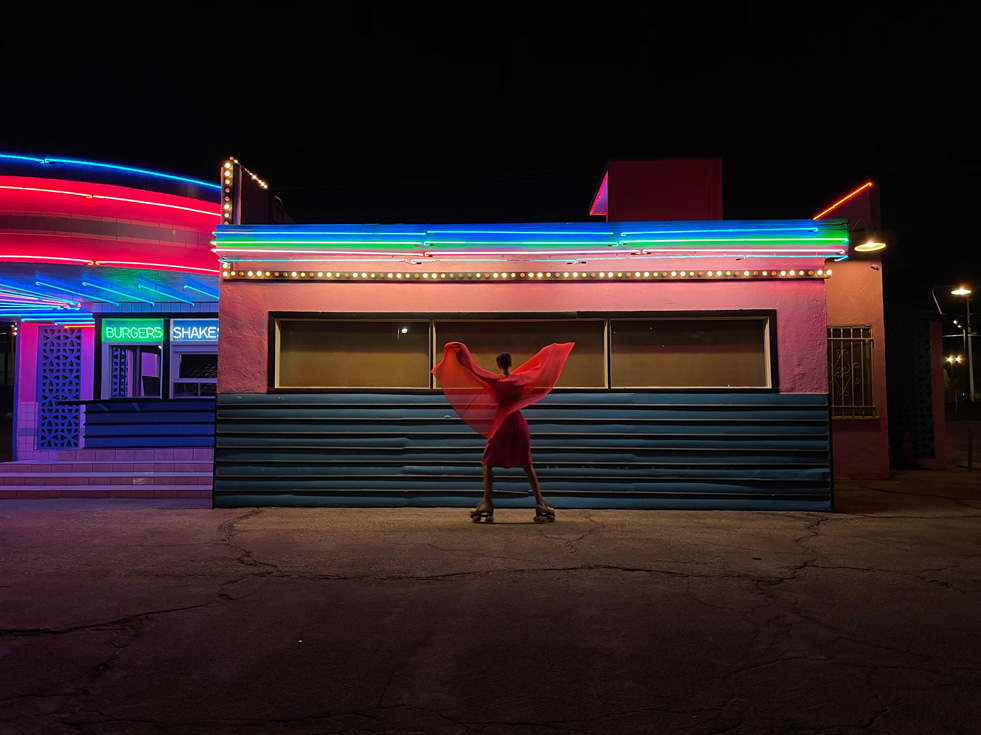
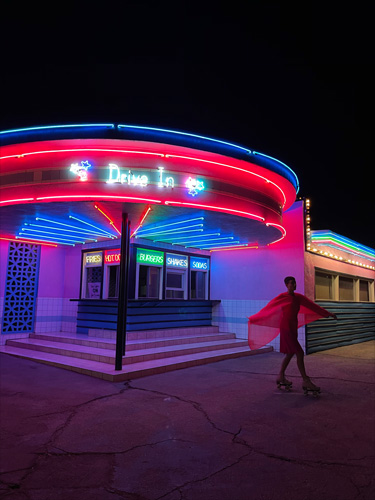
Colors are remarkably true to life in almost any light, like all the translucent reds in her outfit, and the saturated neon hues of the diner behind.
A snapshot of each camera.
iPhone
12 Pro
- 52 mm focal
length - ƒ/2.0 aperture
- Focus Pixels
- 6-element lens
- OIS
iPhone
12 Pro Max
- 52 mm focal
length - ƒ/2.0 aperture
- Focus Pixels
- 6-element lens
- Sensor-shift OIS
iPhone
12 Pro
- 13 mm focal length
- 120º field of view
- ƒ/2.4 aperture
- 5-element lens
- Lens correction
iPhone
12 Pro Max
- 13 mm focal length
- 120º field of view
- ƒ/2.4 aperture
- 5-element lens
- Lens correction
iPhone
12 Pro
- 52 mm focal length
- ƒ/2.0 aperture
- Focus Pixels
- 6-element lens
- OIS
iPhone
12 Pro Max
- 65 mm focal length
- ƒ/2.2 aperture
- Focus Pixels
- 6-element lens
- OIS
- Ultra Wide
- Wide
- Telephoto
Apple ProRAW. For an absurd amount of creative control.
Apple ProRAW. For an absurd amount of creative control.
ProRAW gives you all the standard RAW information, along with the Apple image pipeline data. So you can get a head start on editing, with noise reduction and multiframe exposure adjustments already in place — and have more time to tweak color and white balance.
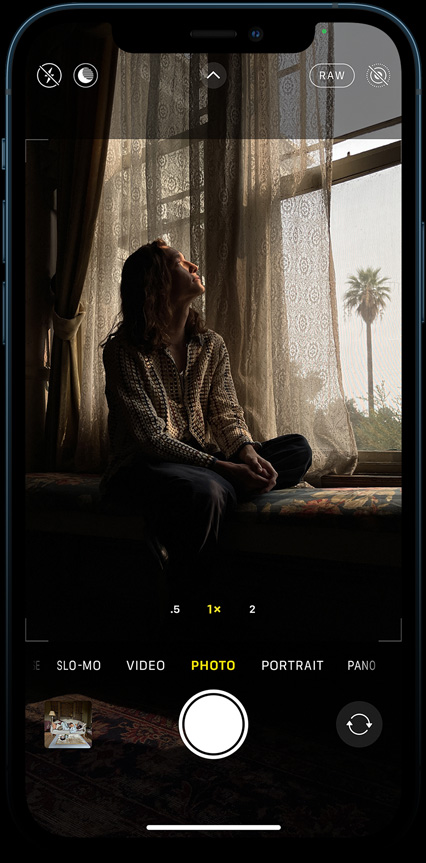
Dolby Vision recording
60 times more colors. Infinitely more spectacular.
First camera ever to record in Dolby Vision
iPhone 12 Pro jumps from 8- to 10‑bit HDR recording, capturing 700 million colors for much more lifelike video. Then it goes one better, recording in Dolby Vision — the format used by film studios. You can even edit Dolby Vision video and use AirPlay to see every last bit of the difference on the big screen.

AirPlay streams your 4K Dolby Vision video to Apple TV and
smart TVs.6
Now every night
is movie night.
The Wide camera’s larger sensor brings way more detail out of the shadows. And for the first time, you can take Night mode Time‑lapse videos with a tripod to capture scenes with dramatic motion. Now even your movies can pull an all-nighter.